The Factory Floor Just Came for Software
Simon Willison on agentic engineering, dark factories, and why testing is the new constraint
Simon Willison, co-creator of Django and a respected voice in applied AI, was a guest on Lenny Rachitsky's podcast this week. It's a long conversation but worth a listen. I'm pulling four observations that landed for me.
The November Inflection Point
Willison marks a specific threshold in late 2025 when the models crossed from "mostly works, pay close attention" to "almost always does what you told it to do." It's a practitioner's observation of a qualitative shift in reliability. Anyone using these tools seriously felt it. Agentic engineering is now the state of the art for professional software development, well past novelty projects. The question is what gets built on top of that new baseline.
From Vibe Coding to Agentic Engineering
Vibe coding, prompting your way to a working prototype without deep rigor, is legitimate when you're the only one affected if something breaks. The moment that output is trusted by others, integrated into production, or deployed at scale, the rules change entirely. That's agentic engineering: structured environments, test coverage, defined handoffs, human accountability for outcomes. The maturation from one to the other is the story. LLM-driven development has crossed from novelty into a serious professional discipline, and the engineers who treat it that way are the ones producing work that actually holds up. Simon addresses "What is agentic engineering?" on his site. (I'll post a link to that in the comments.)
Dark Factories
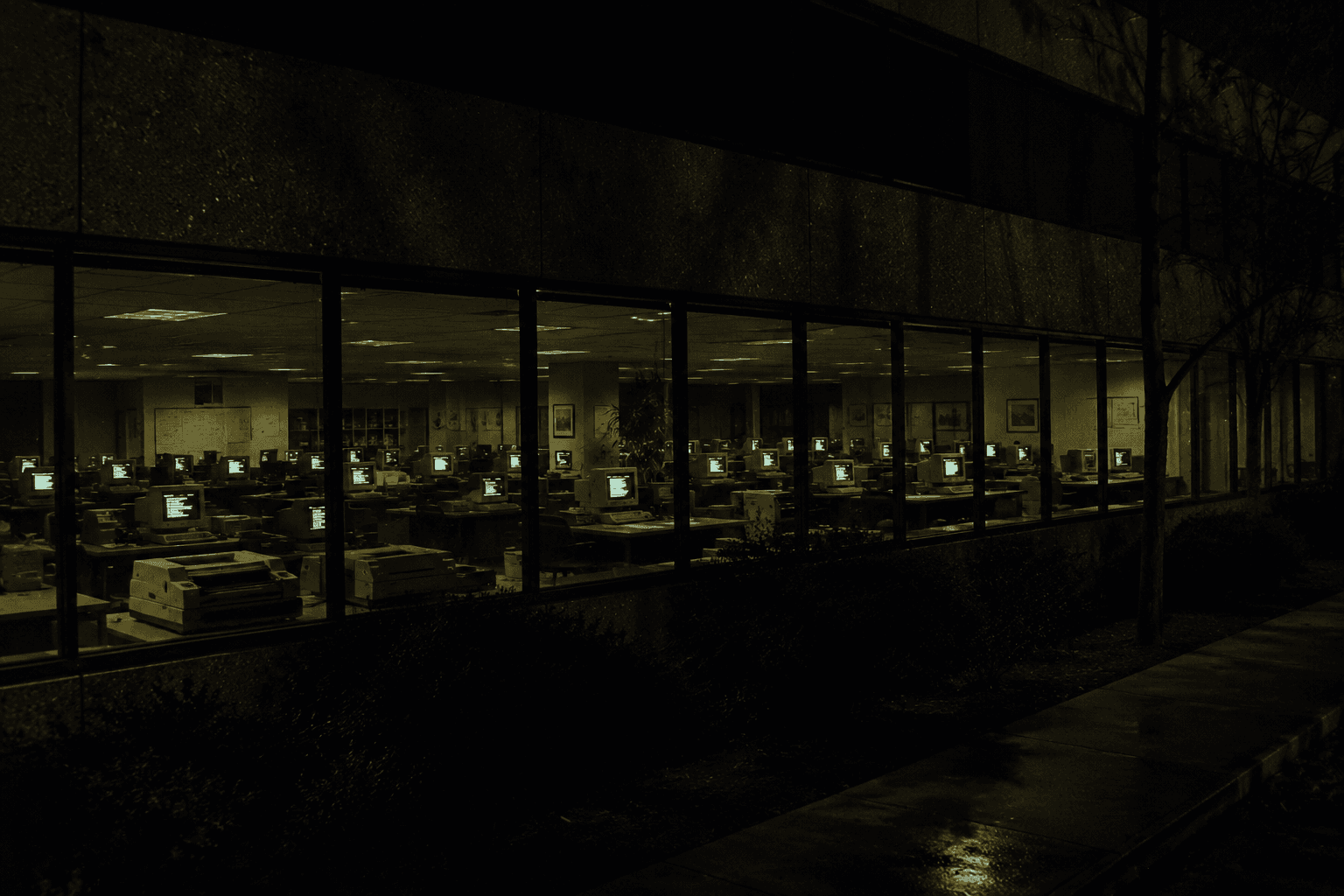
The concept comes from physical manufacturing... a factory so automated it doesn't need lights because there are no people on the floor. Willison describes software teams already operating on this principle, first nobody writes code, then nobody reads it. Agents generate, agents review, humans set direction and evaluate outcomes. In any domain where work is rules-based, sequential, and verifiable, the factory floor is a recognizable concept.
Testing as the New Bottleneck
When generation compresses from weeks to hours, the constraint shifts entirely. You can build three versions of something in the time it used to take to build one. The question is no longer "can we build it?" It's "how do we know it's right?" Verification and validation move from downstream afterthoughts to the primary constraint on velocity.
Willison frames software engineering as a bellwether for other information work. I'd push that further for anyone in media: content development and delivery has meaningful structural parallels to code development and delivery. Assets move through pipelines. Versions proliferate. Metadata must be accurate. Compliance must be verified. Delivery must be confirmed. If you internalize media as code, these four observations stop being a developer's story and start being a story for media creation and delivery too.
The patterns arriving in software engineering arrive elsewhere on a short lag. The lag is getting shorter.