What AI Assistants Need Before They Replace Apps
Why We're Still in the 'Command Line Era' of AI and What Comes Next
At Y Combinator recently, Andrej Karpathy gave a presentation that's worth watching if you haven't seen it.
Andrej offers a grounded understanding of where things stand in AI today, along with several relatable frameworks for thinking about where we are in the AI journey. He asserts that we're at the start of an exciting "Software 3.0" age, where much of what was written historically will be rewritten using AI toolkits and agentic architectures. He provocatively refers to English as the hottest new coding language. He also likens LLMs to operating systems and places us in the early mainframe era of OS advancement.
That's an interesting observation, which leads me to a follow-on question… What do LLM "OS" providers need to add to their ecosystems to become mature platforms?
User Interface Toolkit
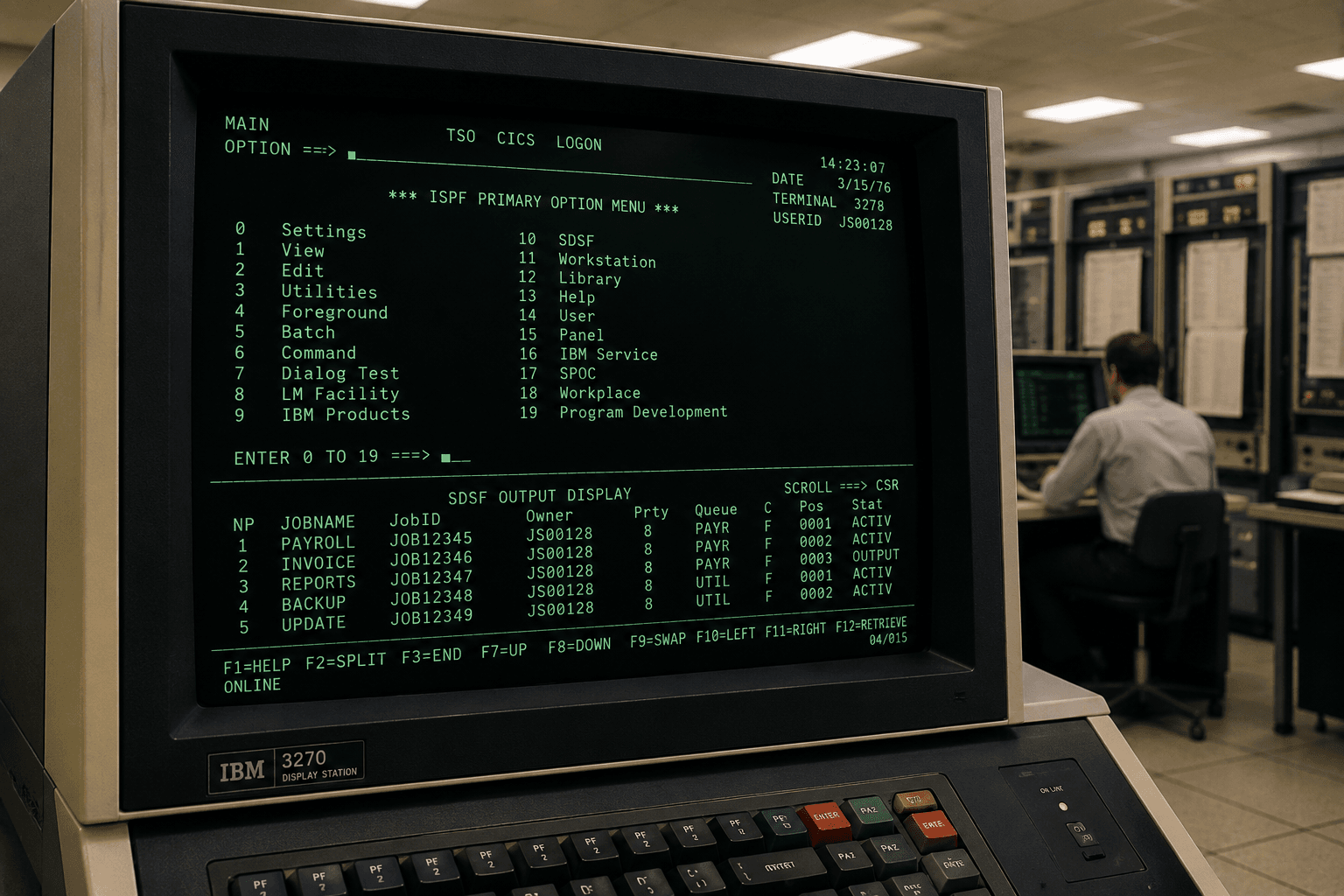
User interface sophistication and flexibility is an obvious one. Karpathy likens our chat-based interactions with AI assistants today to working with command-line interfaces in the mainframe era. He observed that we haven't yet transitioned into the GUI phase.
He's right, and that's an important point. We're largely constrained to linear, text-based chat or voice conversations. There isn't a reliably-integrated UI framework to support more complex interactions. There isn't an exposed media player. There is no elegant or consistent access to map functionality. Simply put, we're not yet at a point where we can rent a movie or order car service through an AI assistant natively, without having to step outside the tool's boundaries.
There are signs of more advanced interface support emerging, though. Perplexity's newly-unveiled Comet browser and Perplexity Labs are big steps toward more comprehensive, richer UI capabilities. Anthropic's Artifacts platform and their recent announcement of mini-apps via Claude Artifacts illuminates another path to where this leads. OpenAI just announced its plan to launch a browser as well, which will undoubtedly dovetail similarly into the ChatGPT experience.

We're seeing the emergence of the sidecar panel as a canvas for extension of chat interaction and as real estate to return embedded browser responses. That's powerful.
User Persistence, Profiles and Privacy
Next up, the AI platforms need to expose tooling for user and context persistence so that development partners can integrate into these "operating systems" without requiring users to log-in every time. That's long been solved in mobile and on web operating environments. iOS and Android app developers maintain context about their users across app invocations. Websites use cookies to accomplish the same.
We don't have that in AI apps yet. For the most part, every day is a new day. Andrej humorously compares the situation to Adam Sandler's character in 50 First Dates, who wakes up each morning having forgotten everything about the preceding day. For tech platforms, that's problematic and doesn't scale.
Of course, there are significant privacy and security considerations once user sessions are maintained over time. Consumers will want controls over what information is being shared, and mechanisms to manage privacy.
For Perplexity, OpenAI, Anthropic and others, it's a minefield, but they need to tackle it. Google and Apple have an obvious lead there, having had to wrestle through privacy controls over the past 15+ years of mobile app evolution.
App / Agent Stores
As AI interface capabilities and user controls mature, we'll see AI players deploy genuine application stores that add valuable, integrated extensions to their respective AI assistants. I, for one, would love to be able to order an Uber directly through Gemini, Claude or ChatGPT, without having to crack open the Uber app.
The seeds of that are taking root.
Enter the buzz around Model Context Protocol (MCP). MCP servers are springing up at an incredible rate to extend native LLM capabilities. Today, MCP is mostly about exposing datasets and utility resources. That's super meaningful, but it gets more interesting when those MCP servers evolve, by getting bundled into domain-specific, orchestrated solutions and returning responses wrapped in bespoke UI native to the AI assistant experience.

Anthropic supports MCP Integrations in Claude, which allows users to extend Claude with these services. To me, that feels like an early App Store, though it's not clear how that'll reconcile with their Artifacts approach. Maybe MCP integrations and Artifacts will ultimately merge into a real App Store for Claude.
Regardless, it's not hard to picture adding "apps" natively into one's AI assistant. Building on the Uber example above, one could imagine ordering car service via chat request and monitoring driver progress in a right-hand "tab".
Once you open the door to conceptualizing such things, you very quickly get to a point where you wonder if anything that's a mobile app today could be recast to an app in this new environment. I reckon it could, and that's exciting.
Branding
To build meaningful App Stores, the AI platforms need to determine how they will allow and manage 3rd-party branding in their environments. Partners like Uber or OpenTable need to be able to convey their value and harness consumer awareness of it.
Consumers need to be able to find and add branded services like Airbnb. They need to understand that they're adding Airbnb, and Airbnb needs allowances to reinforce the value they bring to the user. Aside from branding in an App Store listing, partners like Airbnb also need latitude within whatever UI capabilities are exposed, so such key extensions can maintain their relationships with end users as they engage.
Deterministic Agents
Brands are particularly important in scenarios that involve trust networks. Uber and Airbnb are obvious examples that I've referenced above. The predictable experience of using those is important to consumers and businesses.
AI Assistants create an environment that demands new trust frameworks around agents. The LLMs themselves are incredible probability machines. But, they are just that, probability machines, which have nondeterministic outcomes and hallucinations as a byproduct. That creates problems in scenarios that require predictability... like contracts, usage rules, licensing, rights regimes, regulations, compliance, and pricing.
In those scenarios, the AI Assistants and their underlying LLMs will need deterministic agents that provide predictable and reliable outputs with provenance, validation tools and attribution.
Monetization
Monetization options for partners in the AI Assistant world are limited at the moment. Today, the best option to monetize an offering is to implement an MCP server supported by an API key model that can be structured on a metered basis or an "all you can eat" subscription model.
That's a meaningful start, but additional monetization models need to develop.
Many businesses need to be able to transact directly for physical goods, digital goods and subscriptions through AI platforms. Marc Andreessen has characterized not having built payments natively into the browser from the start as an "original sin" of the web. We'll almost certainly avoid that sin this time around.
I expect we'll see payments integrated into these AI platforms to support such transactions. Perhaps more interestingly, we're also likely to see micropayments enabled, perhaps via cryptocurrencies, and built into the fabric of these platforms to enable new content models and new agentic payment structures.
Advertising is another model that will almost certainly emerge to support users who would rather pay with time than cash. Advertising has many well-documented downsides that the LLM platforms will try to avoid or solve, but the integration of ad services is inevitable.
We may also see bundling models with AI players like cable bundles. In such a scenario, key agentic partners might receive part of a AI Assistant's aggregated monthly billing based on some measure of the utility each of the underlying agentic partners provides.
Contacts and Communications
AI Assistants will also need to allow users to identify their contacts and support communications and communities atop their platforms. Maybe these capabilities emerge through partner apps, but ultimately, it may prove more powerful for social graphs to be integrated directly into the AI Assistant, much like communication features are built into mobile operating systems.
OpenAI has announced the intent to build a social network, so maybe that evolves into more advanced social graph capabilities. Perplexity acquired a team with social experience. Facebook and X already have social tooling at scale. Anthropic has been silent about any plans to make social graphs natively available in Claude.
We'll see.
What's Next?
I'm sure that I've missed a couple obvious gaps and that the list will grow over time. The LLM companies are certainly aware of and focused on these issues. I plan to keep a close watch on minor and major moves that hint at how this will play out.
In the past two posts, I outlined how LLM operating systems will extend to support an Agent Economy ecosystem, but it's worth reiterating that a LOT of what is today supported by separate websites, apps and services will be subsumed by the LLM's capabilities.
Entrepreneurs laying plans to build the Software 3.0 future should be keenly attuned to what characteristics will allow businesses to survive and thrive. In the next post, I'll outline a number of business characteristics that enable protection against obsolescence by LLM.